


Is the art of pro wrestling forgotten in modern wrestling?
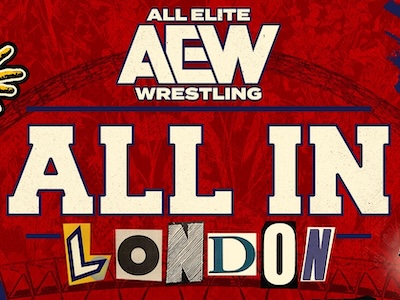
Before I start this column, I just wanted to give a little update on my previous column about AEW’s redemption in Montreal. As of right now, as I predicted in that column, AEW ticket sales are below what they did the last time they came to Montreal, which isn’t a good sign for the company or the debut of their brand-new PPV. They decided to only release around 7,000 tickets for the event, which is a little less than half of the arena’s wrestling capacity. As of the latest reporting, they had sold around 5,000 tickets, which is decent since they’re above what they did for the last Dynamite in Montreal. However, it’s still not a great number for a PPV, and since the building can hold around 15,000 fans for wrestling, it’s still going to feel like a very empty arena. AEW will have to do everything in its power to make it look like the arena is completely sold out, but you won’t get a great atmosphere inside because of how poorly sound travels when the building is only half full.
So I sure hope Tony Khan has something up his sleeve to generate more interest in this event because, if he doesn’t, this might end up being the lowest attendance for an AEW PPV in the company’s history, and I doubt AEW will ever come back to Montreal.
So, I went to Montreal Comiccon this weekend and had a lot of fun. While I do think celebrities see these conventions more as a business now than an actual way to meet fans, it’s still a lot of fun to meet your favorite stars and even get a chance to receive an autograph or take a picture with them. Now, on to the main topic.
I went to Montreal Comiccon last weekend and really had a blast despite these events becoming more expensive than ever, especially if you want to get an autograph or a selfie with a celebrity. At the event, there were three wrestlers booked: Mick Foley, who I wasn’t able to meet this time but did cross paths with and who looked older and clearly not in ring shape; Tatanka, who was a last-minute replacement for Billy Gunn and was just an awesome guy; and D-Von Dudley, who I wanted to get an autograph from, but I had to choose between him and Tatanka, and I ended up going with Tatanka.
During the event, D-Von held a Q&A session, and somebody asked him about his thoughts on modern wrestling. He talked about how, in his opinion, the art of professional wrestling has been forgotten by many modern wrestlers and that it’s now all about the moves rather than storytelling and character work. He said that’s why nobody is truly connecting with today’s wrestlers the way fans connected with them during the Attitude Era or the Golden Era.
As I was listening to him talk about this, I actually started to agree with him. Nothing against modern wrestlers, but I can definitely see his point while watching WWE and, to a certain extent, AEW.
I see it a lot in WWE. You can tell the difference between how the veterans work their matches compared to the younger guys. Just look at the Breakker vs. Rollins steel cage match from a few weeks ago on Raw. You could tell Rollins was leading the match because it was designed to tell a story, and every spot served that purpose. It resonated with fans to the point where we’ll probably remember that match for a long time.
On the other hand, how many matches featuring younger wrestlers have fans already forgotten? Too many to count, in my opinion, because the newer generation is so focused on what moves they’ll perform to get a big reaction that they forget one of the oldest lessons in wrestling: less is more. If you’re able to tell a compelling story and get your character over with the crowd, you won’t need to rely on a bunch of dangerous high spots just to get fans to react.
When you go back in time, what made the Golden Era or the Attitude Era so popular that fans are still talking about them and rewatching those matches today? It wasn’t the in-ring moves. It was the storytelling and the fact that those wrestlers were able to get their characters over. That’s why so many of them are still remembered today and have either been inducted into the WWE Hall of Fame or another wrestling Hall of Fame, or are simply considered legends.
Take the Golden Era, for example. Fans were just as excited to see somebody like Koko B. Ware and The Bushwhackers as they were to see the top stars like Hulk Hogan, Jim Duggan, The Ultimate Warrior, and Randy Savage. The same thing happened during the Attitude Era. Looking back, Too Cool was just as over as some of the main event talent.
We still talk about these wrestlers because they connected with us, not because of how many five-star matches they had.
I’ll even use a more modern example: Kurt Angle. Kurt was an incredible wrestler who had countless great matches, but my question is this: would fans still remember those classic matches if he had simply been another bland wrestler with no personality? I truly doubt it. What made Angle special was that he was the total package. He had an outstanding character that got him over with the audience, which elevated his matches and made it much easier for fans to become invested in the stories he was telling.
Unfortunately, I feel like that’s something that’s been forgotten today, especially in AEW. Outside of MJF, to an extent Ricochet, and maybe Swerve—although people don’t seem to be talking about him nearly as much anymore—it feels like the focus is on how many moves wrestlers can fit into a match instead of actually telling a story and getting their characters over with the audience to the point where fans genuinely want to invest their time watching them wrestle.
Before I conclude this column, I’ll use the example D-Von gave during his Q&A session to illustrate my point. Go back and watch the TLC Match from WrestleMania X-Seven, which is still considered one of the greatest ladder matches in wrestling history. Looking at it through modern eyes, the match almost seems tame compared to what wrestlers do today. But go back and watch it carefully. Every move and every high spot actually meant something. Everything was designed to tell a story and pull the audience deeper into the match.
That’s why fans are still talking about it all these years later. The same can be said for so many classic matches, from Ricky Steamboat vs. Randy Savage, the Ric Flair vs. Ricky Steamboat trilogy, The Undertaker vs. Shawn Michaels, The Undertaker vs. Triple H, and even more recent matches like CM Punk vs. Drew McIntyre or CM Punk vs. Roman Reigns at WrestleMania this year.
In the end, I believe the only way wrestling can ever reach the heights of the Golden Era or the Attitude Era again is if wrestlers realize they don’t need to perform a complex gymnastics routine to get over. It’s not about how many stars your match gets from the Wrestling Observer or where it ranks on Cagematch. It’s about whether your character connects with a mainstream audience.
Guys like MJF understand that, and that’s one of the reasons he’s been able to attract attention from Hollywood and land acting roles. He understands that you don’t need outrageous stunts or endless high spots to become a star. You need to play a character that connects with the audience. If you can do that, fans will remember you. That’s why, outside of Chris Jericho, he’s still the closest thing AEW has to a genuine mainstream draw.
But that’s the problem. Until the independent wrestling mentality is put aside and the industry returns to what actually made professional wrestling great, we’ll never get back to the heights of the Attitude Era, no matter how hard Triple H, Tony Khan, or anyone else tries to recreate it. That era was built on unforgettable characters and compelling stories—not endless high spots and flashy moves.