




Smoke Break Psychology: The World Doesn’t Revolve Around Your Living Room
I rolled out of bed this morning, glanced at the clock, and got a little more excited when I realized my favorite holiday was just two days away.
Then I remembered that tonight is my youngest daughter’s first school dance.
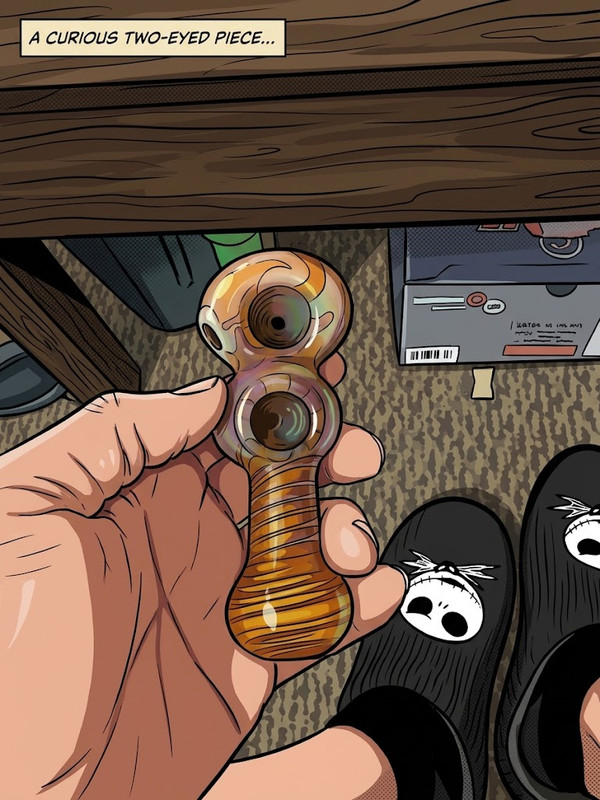
Naturally, I packed a double-barrel pipe. Some mornings require a little extra processing power.
Once the smoke cleared, somewhere in the middle of listening to Welcome to Night Vale, the Weed Gods handed me an idea for this column.
Or I got high and started thinking about wrestling fans again.
Either way, here we are.
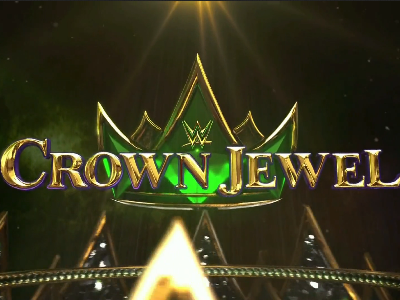
Everyone is writing about Crown Jewel in Saudi Arabia, wondering whether it should be moved because of the ongoing conflict in Iran. I’m not here to add another vote. People have written about it, talked about it, debated it. I’m not sure I have anything new to contribute to that particular discussion.
What interests me more is what happens underneath it.
The comments here. The replies on X and Threads. Wherever wrestling fans gather to discuss something until everyone involved wishes they hadn’t.
Because those conversations don’t just tell us what people think about a wrestling show. Sometimes they tell us how people see the rest of the world—and how little room they’ve left for anyone else’s view.
That’s where I want to go with this.
Bear with me. The pipe had two barrels, but I promise there’s a destination.
As American fans, I think we sometimes struggle to see beyond our own borders. We grow up hearing about freedom, capitalism, democracy. We’re told we live in the greatest country in the world. Hear that enough and it can stop sounding like an opinion.
It becomes the starting point for how we judge everyone else.
But how often do we consider how everyone else sees us?
Belgium. Denmark. Finland. France. Germany. Ireland. The Netherlands. Portugal. The United Kingdom. Canada. China. Australia. New Zealand.
These countries have published travel advice or warnings for people visiting the United States. Those notices vary, and a travel advisory doesn’t automatically mean “don’t go.” But concerns raised across them include gun violence, treatment of transgender travelers, border searches, and possible detention.
Not exactly the tourism brochure we’d write for ourselves.
We know this country through our everyday lives. Someone considering a visit might know it through headlines, warnings, and whatever story most recently made its way across their screen.
Those are different pictures.
That doesn’t make criticism of Saudi Arabia wrong. It doesn’t make the countries interchangeable, and it certainly doesn’t answer whether a show should take place during a conflict.
“America has problems, too” isn’t a safety plan.
But it should give us a reason to examine how we arrive at our opinions.
Are we talking about a specific danger? A government’s actions? The people who live there? Or have we thrown all of those things into one pile because the place feels foreign to us?
When something frightening happens here, do we see it as something that happened within a country we understand? When it happens somewhere else, does it become our entire understanding of that country?
I’m not asking whether every place is equally safe.
I’m asking whether we’re equally willing to look closely.
Now, this is where I go a little hippie-stoner-spiritualist. You were warned in the opening paragraph.
I think wrestling’s globalization can mean more than another market, another stadium, and another announcement about how much money somebody made.
Of course it’s about money. I’m not under the impression that these companies are booking international shows because someone in the office wanted globalization.
But the reason a company puts on a show doesn’t have to define everything that show means to the people watching it.
For the company, it’s business. For someone in the building, it might be their first chance to see a wrestler they’ve followed for years. Someone whose matches they’ve stayed up to watch, whose shirt they wear, whose entrance music makes them act like an idiot.
You know. Like us.
That’s the part I don’t want lost in the conversation.
We can question a government’s actions without treating everyone living under that government as its representative. We can question a wrestling company’s business arrangements without dismissing the fans who finally get a show.
We can care about the people in the seats and still question the people making the deal.
Those things don’t cancel each other out.
If wrestling is going to become more global, I’d like us to get something out of it beyond learning which stadium can fit the most people. A little curiosity would be nice. An interest in the people watching the same ridiculous thing we love, from a place we might know very little about.
Not because wrestling is going to fix the world.
But it can give us a reason to look beyond ourselves.
And apparently, we could use the practice.
I’ll be the first person to admit that I don’t like AEW.
That tells you what I enjoy watching. It doesn’t establish what you’re allowed to enjoy watching.
Your love of AEW doesn’t make my night worse. My preference for WWE shouldn’t ruin yours. Neither of us needs to stand outside the other’s television with a clipboard explaining why they’re having fun incorrectly.
Yet we’ve built this ridiculous fan war around the idea that someone enjoying a different wrestling show is somehow an attack on us.
We turn a preference into an identity, then spend our free time defending it from people who weren’t doing anything to us in the first place.
I can tell you why AEW doesn’t work for me without insisting that it shouldn’t work for you. There’s a difference between having an opinion and needing everyone else to live inside it.
Obviously, arguing about a wrestling promotion isn’t comparable in seriousness to discussing war, human rights, or whether people can safely attend an event. I’m talking about the habit underneath the argument: assuming that what we see from where we’re standing must be the whole picture.
It isn’t.
Ask questions about Crown Jewel. Question where companies go, whose money they take, and whether the people involved will be safe. None of this requires giving anyone a pass.
Just leave room for the fans, too.
The person finally seeing their favorite wrestler. The parent taking their kid. The crowd getting a night they’ve been waiting years to experience.
We understand why that matters when it’s us. I’d like us to remember it when it’s somebody else.
Maybe that’s all I’m getting at. We don’t have to agree on every country, every company, or every wrestling show. We could just be a little more curious about one another and a little less convinced that the world revolves around whatever’s playing in our living room.
Anyway, I’ve got a daughter getting ready for her first dance, which means I have my own changing world to come to terms with.
The Weed Gods gave me a column. Apparently, they don’t handle that part.
One crisis at a time.
Until the next smoke break, be excellent to one another.
Follow me on X: @thatdonniesb