


Smoke Break Psychology: God Emperor of Monday Nights

God Emperor of Monday Nights
Smoke Break Psychology | by ThatDonnie
Here’s how it happened.
I’m on my third bowl, No Control rattling the walls like Bad Religion is personally angry at my drywall, and I’ve got God Emperor of Dune open in my lap. Book four. The one where Leto II — Paul Atreides’ son, the chosen one’s chosen one — has been sitting on a golden throne for thirty-five hundred years. He’s not fully human anymore. Somewhere along the way he fused with a sandworm, which is the kind of career pivot that makes everything else look conservative. He rules through total dominance. He manufactures his own opposition to keep the story moving. His court thinks they’re watching a tyrant. They’re actually living inside a design so vast that nobody around him can see the edges of it.
Greg Graffin is screaming about the chaos of human pattern-seeking over three-chord arrangements and I’m somewhere between the couch cushions philosophically, and I look up.
Raw is on.
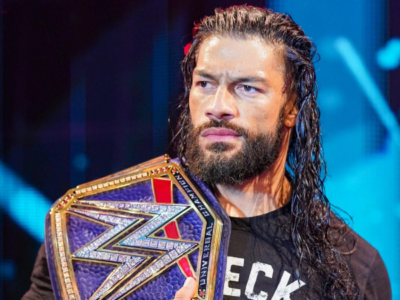
Roman Reigns walks through the curtain.
And something just clicks.
Not like a light switch. More like one of those moments where two things you’ve known separately your whole life suddenly occupy the same space and you realize they were always the same thing. The fog parts. The sandworms start making sense.
I’ve been watching wrestling wrong. Or rather — everybody’s been watching wrestling wrong. And I think I finally know how to explain what’s actually happening on your television every Monday night.
YOU’RE READING THE WRONG GENRE
The problem starts at the premise.
Most people watch professional wrestling like it’s a sport. They track wins and losses like standings. They argue about who should hold the title based on merit, as if there’s a front office somewhere making personnel decisions on pure athletic achievement. They use words like “push” and “bury” as if WWE is a meritocracy with a bad HR department. When a guy loses a match, they say he’s been damaged. When a champion retains in a way that seems improbable, they call it unrealistic.
Unrealistic.
In the scripted television program.
This is like picking up Dune and complaining that the spice seems overpowered. You walked into the wrong conversation with the wrong vocabulary and now you’re mad at the book for not being a different book.
Professional wrestling — specifically WWE at its best — is serialized fiction. It is not a sport. It is not a sport pretending to be fiction or fiction pretending to be a sport. It is a novel being written in real time, in public, with a live audience providing feedback, performed by athletes who double as actors inside a universe with decades of accumulated mythology.
The titles aren’t championships. They’re the spice of Arrakis. Whoever controls them controls the narrative. The matches aren’t competitions. They’re plot points. The wins and losses aren’t records. They’re chapter endings.
When you watch through that lens, everything that seems broken about wrestling suddenly makes sense. The logic doesn’t change — your framework does.
And once you make that shift, you can’t go back. The sandworm is out of the bag.
THE GOD EMPEROR AND THE MONSTER THEY MADE
Roman Reigns is Leto II.
Sit with that for a second.
Leto II didn’t want to be God Emperor. He accepted the role because he was the only one who could see far enough ahead to understand what the story required. He manufactured enemies. He engineered betrayals. He ruled so completely and for so long that the concept of opposing him became its own religion. His court wasn’t just his court — it was the architecture of the entire narrative.
Roman Reigns has been the central figure of WWE’s main storyline for the better part of half a decade. The Bloodline isn’t a faction. It’s a mythological framework. The Head of the Table isn’t a nickname. It’s a feudal title with genuine stakes attached to it. The Acknowledgment isn’t a catchphrase. It’s a submission ritual that tells you exactly where every other character stands in the hierarchy of the story.
And now there’s Jacob Fatu.
Fatu doesn’t think Roman ever did anything for him or his family. Solo Sikoa — Roman’s former enemy, now consumed by the story’s wreckage — was the one who brought Fatu into WWE specifically to destroy Reigns. That’s not a wrestling rivalry. That’s a grievance arc seeded chapters ago, now bearing fruit. The Samoan Werewolf isn’t a challenger. He’s a weapon that turned itself around.
What WWE did at Backlash was textbook serial fiction construction. Roman won. Technically. Barely. And then Fatu put the Tongan Death Grip on the champion, superkicked everyone who tried to stop him, and stood over a fallen Roman holding the World Heavyweight Title like a prophet who just got a very specific vision of the future. Roman walked up the ramp and told the cameras “you don’t belong here, Jacob.”
That’s not a match result. That’s a cliffhanger.
The sports brain watches that and says: Reigns won, story over, next challenger please. The serial fiction brain watches that and says: the protagonist just barely survived the second act escalation, and the monster he created is now the most dangerous thing in the building.
They’re heading to Tribal Combat at Clash in Italy. The loser has to acknowledge the winner as Tribal Chief. The title is almost secondary. What’s actually on the line is the entire mythological architecture of the Roman Reigns era. Leto II didn’t fight for territory. He fought for the right to define reality itself.
That’s what’s happening on your Monday nights. You just have to be willing to see it.
THE FORMER PROTAGONIST AND THE TORCH HE’S CARRYING
Here’s where the serialized fiction framework gets genuinely beautiful.
Not every volume of a series has the same main character. God Emperor of Dune isn’t Paul’s book. Paul’s arc ended. Leto II inherited the protagonist role, carried it for thousands of years of in-universe time, and the story kept moving. Former main characters don’t disappear — they become the architecture that new main characters are built inside of.
Seth Rollins was the main character of Raw for a long time. Burned it down. Rebuilt himself. Carried shows. Main evented WrestleManias. Won titles. Did the work. He was the story for stretches of this company’s history.
He’s not the main character of Raw right now. He’s doing something more structurally important.
Rollins built The Vision with Paul Heyman — a power play faction designed to reshape the landscape of the show. He brought in Bron Breakker. He brought in Bronson Reed. He was the veteran engine meant to pull new talent into main event orbit. And then Bron Breakker, sufficiently charged with borrowed credibility, turned on him. Excommunicated him. Beat him to the betrayal punch because the character Rollins built understood that Rollins would eventually do the same thing.
That’s a student who learned the lesson too well. That’s the apprentice completing his arc by defeating the mentor. That’s a literary device executed inside a wrestling angle.
The injuries scrambled the timing — real life has a habit of doing that to serialized fiction — but the bones of the story are visible underneath. You can see what they were building. A former protagonist using his established credibility to transfer legitimacy to the next generation. And now Rollins is grinding through The Vision’s members, pulling the Street Profits into the orbit of the conflict, building alliances not out of friendship but out of narrative necessity.
Seth told Montez Ford flat out: we don’t have to like each other. We just need each other. And Montez Ford’s entire problem with Seth Rollins — the documented character flaw running through every version of this man’s story — is that Seth always prioritizes his ambitions over the people around him.
That’s not a wrestling promo. That’s character continuity across multiple storylines and years of television. That’s a novelist remembering what they wrote three books ago and paying it off.
The sports brain calls Seth Rollins a mid-card act right now. The serial fiction brain recognizes him as a load-bearing supporting character in someone else’s story — which is exactly what the best serialized fiction requires from its former protagonists. Not every Jedi needs to be the hero of their own movie. Some of them need to die on the bridge so someone else can escape.
Bron Breakker is supposed to be the someone else. The design is visible even through the damage. And Seth Rollins, former God Emperor of Monday Nights, is the instrument making it possible.
ROBIN, NIGHTWING, AND THE BELT THAT BUILDS FUTURES
The midcard title doesn’t get enough credit for what it actually does.
In comics, Robin exists for one structural reason. Bruce Wayne is the main character. Batman carries the central narrative. But you can’t build a universe on one character forever, and you can’t manufacture new main characters from nothing — they need lineage, they need conflict, they need a story that makes the audience care before they’re handed the wheel. So Robin gets the secondary storylines. Robin develops in Batman’s shadow. Robin earns the audience’s investment across years of supporting work.
And then Robin becomes Nightwing. And Nightwing carries his own title. And the universe expands.
The Women’s Intercontinental Championship is the Robin pipeline.
Watch what they’ve done with it. Lyra Valkyria was the inaugural champion — a real talent, a credible first holder, but the belt needed gravity it couldn’t manufacture on its own. So Becky Lynch took it from her at Money in the Bank. Becky — a seven-time champion, a WrestleMania main eventer, a genuine star — wrapped her established credibility around that title and made it mean something. Challengers lined up. Lynch knocked them down. The belt became real because a real star treated it like it was.
Then Maxxine Dupri. AJ Lee running interference, Maxxine capitalizing with a top-rope crossbody, 49-day reign, lost it back to Becky who used the ropes for leverage. The sports brain screams burial. The serial fiction brain watches a controlled experiment — WWE putting a rising performer in the spotlight for long enough to take the audience’s temperature, then moving the story forward when the chapter was done.
Then AJ Lee — a returning legend who’d already made Becky tap out at WarGames — takes the title at Elimination Chamber in her hometown. A legend-versus-legend arc designed to do one specific thing: make Becky Lynch look like a villain worth hating. AJ makes her earn it back. Becky wins at WrestleMania by exposing a turnbuckle and using it when the referee wasn’t looking. Full heel. Conniving. Petty. Perfect.
Becky Lynch does not need this title. She has never needed this title. She is not involved in this title program because WWE looked at the midcard and thought “you know who should be here? The biggest female star of the last decade.”
She’s here because she is the dragon.
Every story needs a dragon. Not a final boss — a dragon. The monster that exists specifically to be in the path of the rising hero. Dangerous enough to be a credible obstacle. Established enough that defeating her means something. Positioned perfectly to lose to the right person at the right moment and transform that person from promising into proven.
Sol Ruca signed her Raw contract and Becky Lynch walked out and hijacked the moment. Ruca called her a rude, big-headed bitch and promised to snatch her soul. The crowd, meeting Sol Ruca for the first time on the main roster, immediately understood the assignment.
Ruca came up through NXT as a double champion — Women’s North American Title, Women’s Speed Championship — lasted over fifty minutes in the Royal Rumble, made it to the final three, turned enough heads internally that WWE was raving about her before she even signed the dotted line. She’s done the Robin work. She’s carried the secondary storylines. She’s earned the right to the next chapter.
Becky Lynch is Nightwing’s dragon. When Sol Ruca slays her — and the story is clearly being written toward that moment — she won’t just win a title. She’ll inherit a narrative position. She’ll step into the space the story has been clearing for her, with an established villain’s loss on her record, and the audience will believe she belongs there because they watched her earn it.
That’s not a sports transaction. That’s a long-form character arc with a predetermined thematic purpose. The midcard title is a narrative machine. The people who go through it aren’t collecting wins — they’re accumulating story.
NOBODY GETS BURIED. THE STORY JUST MOVED.
Let’s talk about the word “bury” for a second.
“Bury” is the sports brain’s most revealing tell. It assumes that professional wrestling operates like a legitimate athletic competition where wins and losses reflect real hierarchy and any deviation from that hierarchy is a political injustice committed by incompetent bookers against deserving athletes.
In actual serialized fiction, characters lose all the time. Protagonists fail. Rising heroes get knocked back down before they climb again. Villains win chapters even when they lose the war. Not every character is the main character. Not every story beat is about the person you’re currently invested in. Some characters exist to develop atmosphere. Some reigns exist to build texture. Some losses exist to make a future victory mean something.
When Maxxine Dupri’s 49-day title reign ended, she wasn’t buried. She was a chapter that served its purpose. When Bron Breakker’s momentum stalled after losing to CM Punk, the story didn’t abandon him — it rerouted him through Seth Rollins to rebuild him differently. When Lyra Valkyria lost the IC title to Becky Lynch, she didn’t get buried. She became the foundation the belt was built on.
The audience that screams “bury” is the audience reading a fantasy novel and getting mad that Gandalf didn’t win every fight in the first hundred pages.
You chose the wrong framework. The book isn’t broken. You’re just reading the wrong genre.
NO CONTROL
Here’s what Frank Herbert understood that most wrestling fans don’t.
God Emperor of Dune is a book about a man who gave up his humanity to become the author of a story too large for anyone else to contain. Leto II didn’t want to be God Emperor. He accepted it because he was the only one with the perspective to see what the narrative required. From inside the story, he looked like a tyrant. From outside it, across the distance of history, he looked like the only thing standing between humanity and extinction.
WWE’s best storytelling operates on the same principle. Roman Reigns isn’t just a character — he’s a load-bearing narrative structure that everything else on Raw is built around. The Bloodline mythology isn’t just a faction story — it’s the spine of an entire era. Fatu, Seth, Bron, Becky, Sol Ruca — these aren’t wrestlers in feuds. They’re characters in a serial with interlocking arcs designed to pay off across months and years.
Bad Religion understood it too, in their own three-chord way. No Control is eighteen minutes of Greg Graffin screaming that human beings are pattern-seeking animals who will impose narrative on chaos whether the chaos cooperates or not. We can’t help it. We need stories. We need structure. We need to know where the arc is going even when we can’t see the ending.
The irony of listening to No Control while cracking the code on WWE is not lost on me. The whole column is about how WWE is all control — deliberate, architectural, constructed with the patience of a novelist who knows exactly which chapter they’re on. Every result, every reign, every alleged burial is a choice inside a tightly managed serialized fiction. The fans losing their minds over what’s wrong with the product are the ones who have no control over their inability to read the genre correctly.
They walked into a bookstore, picked up a fantasy novel, and started arguing with the author about why the protagonist keeps losing fights.
WWE isn’t a sport pretending to be fiction. It’s fiction that borrowed a sport’s clothes.
And once you see it — once the Leto II of Monday nights comes into focus, once you understand that the midcard title is a narrative machine and the former champion doing supporting work is a load-bearing wall and the dragon exists to be slain by the next rising hero — you can’t unsee it.
You’ll watch differently. You’ll read the story instead of keeping score. You’ll understand why some chapters are slow and some are operatic and some exist purely to set up something three volumes from now.
You’ll also probably need better weed and a copy of God Emperor of Dune.
I cannot help you with the weed. But I just handled the other thing.
New columns drop after the smoke clears.
Follow Me:@thatdonniesb on Threads
@thatdonniesb on X
@thatdonnie.bsky.social on Bluesky