Paul Heyman or Bobby Heenan – Why the Wise Man Couldn’t Think Without a Brain
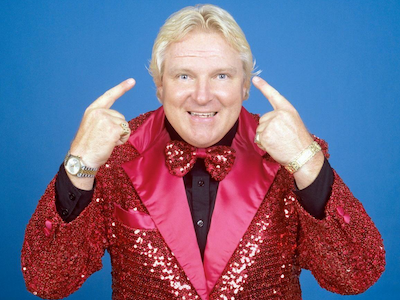
A few years ago, Paul Heyman did a talk show and said some off-color remarks about the legacy of Bobby “The Brain” Heenan. This bugged me, but I let it go because if someone compared me to another person that came before me every time I left the house, I’d probably develop a chip on my shoulder toward that person also. With that being said, Paul Heyman doubled down on his remarks regarding Bobby Heenan recently, and I felt it would be appropriate to give an objective view.
In life, days pass by and you never give those days a second thought. But some days stick with you for a lifetime. In 1990, I was 8 going on 9 years old and was over at my friend’s house trading WWF wrestling cards. It had all the earmarks of a regular old “never think about it again” day until my friend’s father came over, joined us at the kitchen table, and started talking wrestling with us. My friend, Mauro DeSantis, was the child of an immigrant family from Italy, and his father ran a car and body shop near town. So, while his son and I were arguing slightly over one of the Hulk Hogan cards—because to us, the Hulkster was the Babe Ruth, Michael Jordan, and Elvis Presley of pro wrestling—his father started laughing. With a thick Italian accent, as he rifled through the cards, he said, “None of these guys are more impressive than Bruno Sammartino or Ivan Putski.” This conversation, I assure you, was not meaningful to my friend’s father, and if my former best friend ever reads this post, he might not even remember it. But it has stuck with me for a lifetime.
Why? Well, I took Sociology and Psychology 101, 102, 201, and 202 in college. I strongly considered making Psychology my major or, at minimum, my minor. The human condition and how people process and internalize data interests me on a higher level. So, my degree in Technical Writing and Communications (TWC), now known as Multimedia Writing & Technical Communications, might do me well if I write the instruction manual to a desk fan you purchase at your local big-box store. But some of what I learned along the way lends itself to writing an instruction manual for the human brain and how we look at things, including how we put certain things on pedestals.
I mentioned the brief encounter with my friend’s father talking about how his generation of pro wrestling was better than ours at the time because everyone believes their generation was the greatest. To this very day, I can successfully debate with anyone that the music, movies, TV, and sports of the years 1986 to 1992 were the golden era. If you look at my favorites, almost everything I love has roots in that time period. Is it because things were just better in those years and creatively clicked on another level? Perhaps. It also could be that those were the years that my mind was most receptive to things, and because those are the things that were around while my mind was most open, I romanticize them above and beyond their actual greatness. In a sense, I think we all do that. I believe my friend’s father did that with who he viewed as the best wrestlers ever. However, that is not to dismiss his feelings nor the importance of what he views to be great. After all, Bruno Sammartino and Ivan Putski are two of the greatest wrestlers of all time—not because my friend’s father said it in a flippant conversation while rifling through our next generation of trading cards at the time, but simply because they were.
So, in my one-sentence way, allow me to round out why I started this column with the above story.
Bobby Heenan is the greatest wrestling manager of all time and stands in a league all his own.
Some of you will read that statement above and try to justify my view as, “Well, you grew up with Heenan, so that is why you feel that way.” There is some truth to that. But I also grew up with Paul Heyman on my TV, and I’ve seen both men’s entire careers. It isn’t apples to oranges to put one man above the other. It is very much an apples-to-apples comparison. At the core of it—fruit pun intended—one man is the clear victor, and it is “The Brain.”
Let’s look at the lives and times of both “The Brain” and “The Wise Man” and compare.
Bobby Heenan built a career in pro wrestling after dropping out of school. Yes, children, the man we all consider “The Brain,” and to be among the smartest and quickest humans ever to speak into a microphone, never achieved a high school diploma or GED. He left school and started working for Dick the Bruiser’s Indiana territory doing odd jobs before he found his way onto the show. Heenan willed his way into the wrestling business doing a job that few before him had. No, it wasn’t like Heenan filled out a job application to be the next legal secretary at a law firm in New York City. Heenan left school to find a job in an industry that really didn’t have a role for him to fill nor a vacancy to do so. Heenan, to some degree, invented his own career.
Heenan’s career would span decades, starting in the middle portion of the 1960s and extending into the 2000s before TMJ and cancer impacted Heenan’s greatest asset—his ability to speak. From setting up rings to managing wrestlers as a heat magnet in Indiana, to the point where people bought tickets simply to see Heenan, always a manager first and never a wrestler first, take a beating from the local hero, Heenan was off to the races. In the AWA in Minnesota, Heenan would manage the likes of Ray “The Crippler” Stevens and Nick Bockwinkel, among others, once again being the heat magnet that could talk his way into people wanting to see him get beaten up. In fact, my only signed item of “The Brain” is not a picture of him from WWE or WCW—it is a picture of him in the ring with Bockwinkel and Stevens, as this was my favorite time in Bobby’s career even though it happened, in large part, before I was born. Psychoanalyze that one for me, kids.
Everyone says Hulk Hogan’s biggest rival in pro wrestling was Roddy Piper. On the surface, you might think that to be the case. But if you really give it some thought, was there any more longstanding rival to Hulk Hogan than Bobby Heenan? From the starting-to-slump AWA—which Heenan claimed stood for Alzheimer’s Wrestling Association or All the World’s Assholes, you take your pick—all the way to the expanding bright lights of the cartoonish World Wrestling Federation of the 1980s, and even into WCW in the mid-to-late 1990s, Heenan was always involved in Hulk Hogan’s affairs, either on the opposite side of the ring from the “Immortal” one or behind the microphone. More on the latter in a minute.
In the WWF, if Hulk Hogan was responsible for all the kids buying tickets and merchandise, Heenan was responsible for people buying tickets to see him do what he had already done successfully for over 20 years: make people want to see him get beaten up. And Heenan did do this from 1984 through 1992 as a manager. But the entertainment-based WWE did indeed lend itself to Heenan’s humor. Heenan was given his own half-hour talk show as an offshoot of WWF Prime Time Wrestling, the company’s flagship show before that title went to RAW in 1993. The Bobby Heenan Show was devised to be a poor attempt at a late-night talk show format with less-than-A-rated celebrities.
In fact, I recently interviewed Jameson, who was Heenan’s right-hand man on The Bobby Heenan Show. Jameson said, “Bobby was great. He could have gone to Hollywood and made more money, probably, as a comedian.” You can find that interview on the Wrestling Epicenter website. I also interviewed Bobby Heenan himself twice. So, you know, click on over there and stuff. Anyway, cheap plug over. Back to business.
After Heenan retired from managing, he had a wildly successful stint as a broadcast journalist—an expression Heenan coined and that I use on my job résumé to this day to describe myself. Heenan would call WWF’s top shows, including Superstars, Challenge, All American, and Prime Time Wrestling, as well as pay-per-views with various hosts, most notably Vince McMahon or Gorilla Monsoon. If pro wrestling ever had an Abbott and Costello comedy duo, it was The Brain and the Gorilla. Their chemistry made watching a show full of squash matches—each lasting two minutes with an outcome never in doubt from the get-go—more enjoyable than any wrestling show on TV today. Seriously, I’d rather watch “Hacksaw” Jim Duggan versus Chad Duffy from 1991 WWF TV than any match involving Will Ospreay while listening to Excalibur marvel at Ospreay’s athleticism.
In later years, Heenan would jump to WCW and elevate their standing. Do you really believe the Monday Night Wars would have sounded the same if “The Brain” wasn’t helping tell the stories of WCW? By this point, he was almost exclusively an announcer after suffering a broken neck taking a leg drop off the top rope in All Japan Pro Wrestling from Atsushi Onita over a decade prior. Working for WCW, a Turner property, Heenan could finally get the neck surgery he couldn’t previously. Insurance matters, kids! Anyway, in spite of limited physical interaction on WCW TV, Heenan’s voice was a major part of what made WCW seem big league.
“Yeah, but whose side is he on?”
Heenan gets a lot of flak to this day from wrestling purists who claim that Heenan shouting, “Yeah, but whose side is he on?” at Bash at the Beach 1996, when Hulk Hogan was coming down to the ring to presumably make a babyface save for WCW—only to turn heel and form the New World Order—detracted from the moment. Critics, to this day, insist it did. Critics are wrong.
Had “The Brain,” who spent the better part of 20 years battling the Hulkster, suddenly become the world’s biggest Hulkamaniac, it would have seemed out of place. Imagine the scene: “Macho Man” Randy Savage and Kevin Nash in the ring, Hogan emerging from the back, and instead of Heenan questioning him, he suddenly cheers him on. That would have foreshadowed the turn far more than what Heenan actually said.
Anyway, Heenan would return to WWE after the sale of WCW in 2001, call a match at WrestleMania XVII, and make a few documentary appearances in later years as cancer robbed him of his voice.
Now, let’s talk about Paul Heyman’s legacy. I’ll be fair.
Paul Heyman’s start was also similar to Bobby Heenan’s, though it happened 20 years later. Heyman willed his way into pro wrestling through magazines and networking, attaching himself to talent such as Eddie Gilbert and Bam Bam Bigelow while working his way into the industry by any means possible. Appearing in local territories and on nationally syndicated broadcasts like Pro Wrestling This Week, hosted by Joe Pedicino, Gordon Solie, and Boni Blackstone, Heyman got himself over with wrestling fans through his obnoxious delivery. Come to think of it, while there is less hair and more weight on Heyman today, he hasn’t really changed his act much. If it ain’t broke, don’t fix it.
Heyman, then known as Paul E. Dangerously, likely got his biggest early break managing The Midnight Express in the later days of the AWA. This led to a run in WCW and the formation of the Dangerous Alliance faction, very much in the Bobby Heenan Family mold.
Heyman’s biggest contribution came with ECW. While some—including me—could argue that ECW would not have existed without Tod Gordon, the juggernaut it became helped reshape wrestling. Featuring a hardcore style and more risqué content, ECW positioned itself as a genuine alternative to WWF and WCW.
Missy Hyatt once called Heyman the David Koresh of pro wrestling—a cult leader figure who could convince people to sacrifice for his vision. While extreme, the comparison reflects Heyman’s persuasive ability. Many performers put their bodies on the line for ECW, often without long-term financial reward.
In 1997, Heyman joined WWE’s payroll while still running ECW, effectively making ECW a pseudo-developmental system while marketing it as counterculture. By 2000, ECW was collapsing financially, with talent not being paid. Mike Awesome, then champion, left for WCW to get paid—a decision that sparked backlash.
In 2001, ECW officially folded, and Heyman appeared on WWE RAW, marking the end of the promotion. It was a defining and controversial moment in his career.
Heyman ultimately achieved his goal: long-term success in WWE. Aligning with top stars like Brock Lesnar and CM Punk, he has remained a central on-screen figure for decades, using his unmatched promo ability to elevate storylines.
So, there is the legacy of both men.
Bobby Heenan created a role for himself that didn’t truly exist before him and defined it. He broke his neck for the business, provided the comedic soundtrack for multiple boom periods, and influenced countless performers—including Paul Heyman.
Paul Heyman forced his way into the business, found success across multiple eras, revolutionized wrestling with ECW, and has maintained relevance for decades through his speaking ability and adaptability.
Who is better?
Well, that is a matter of opinion. Was Jimi Hendrix a better guitar player than Eddie Van Halen? Probably not. But would there have been a Van Halen without Hendrix? Also probably not.
Was Bobby Heenan a better talker than Paul Heyman? They are likely closer than people think. But I do believe there would not have been a spot for Paul Heyman had Bobby Heenan not, more or less, created it.
Don’t confuse longevity with greatness. The Brooklyn Brawler and The Miz have had longer WWE careers than Hulk Hogan, Randy Savage, and Roddy Piper combined, but few would argue they eclipse those legacies. Still, there is something remarkable about Heyman remaining a major presence from WCW in 1992 to WWE in 2026.
In the end, the original is often the best. And while modern familiarity can elevate perception, history matters.
Bobby Heenan is not in Paul Heyman’s league. He’s far above it. And the history books will reflect that… if Paul Heyman isn’t the one writing them—or if he doesn’t hold David Koresh-style power over whoever does.